Every indoor blind is managing heat that has already come through the glass. A roller shutter stops it
before it gets there. The slats sit on the outside of the window, so the solar energy is absorbed and re-radiated
outdoors instead of into your lounge — which is why external shading outperforms internal shading by a wide
margin on a hot afternoon.
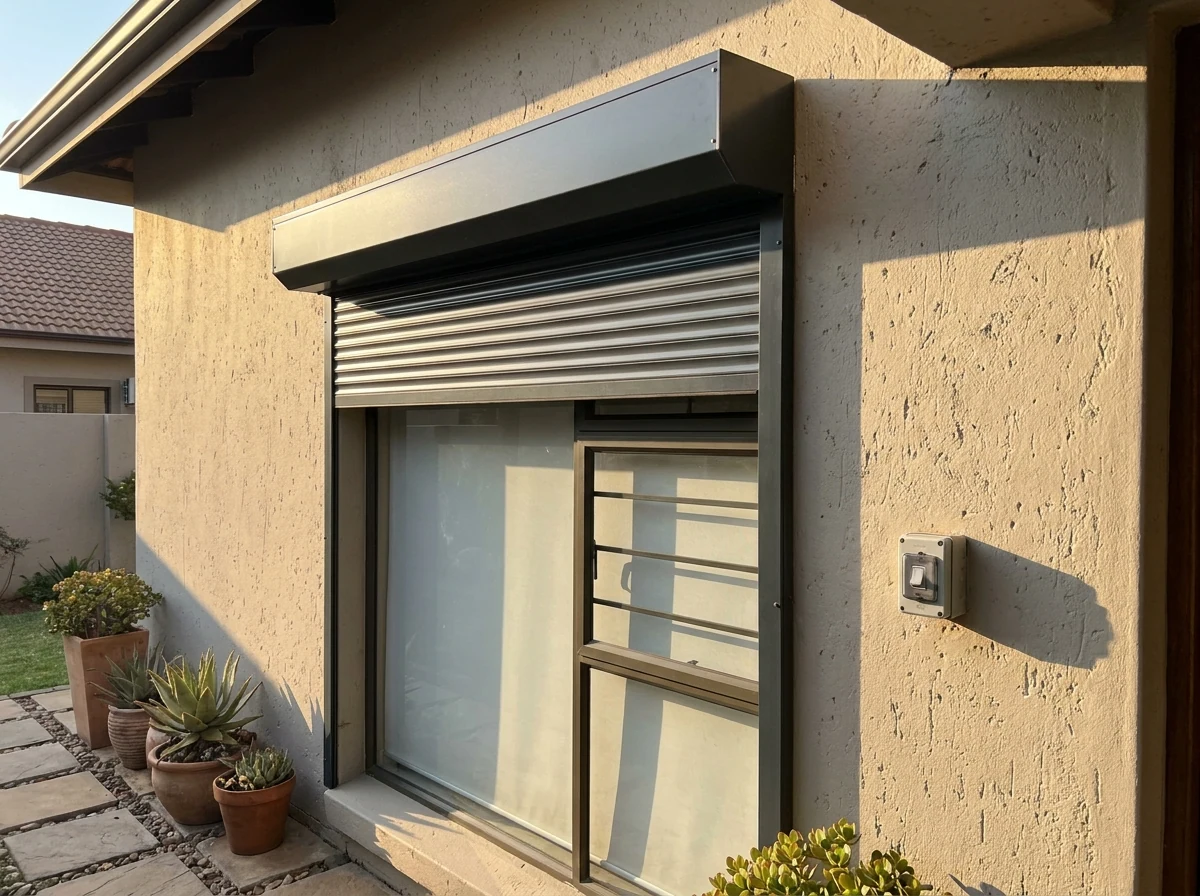
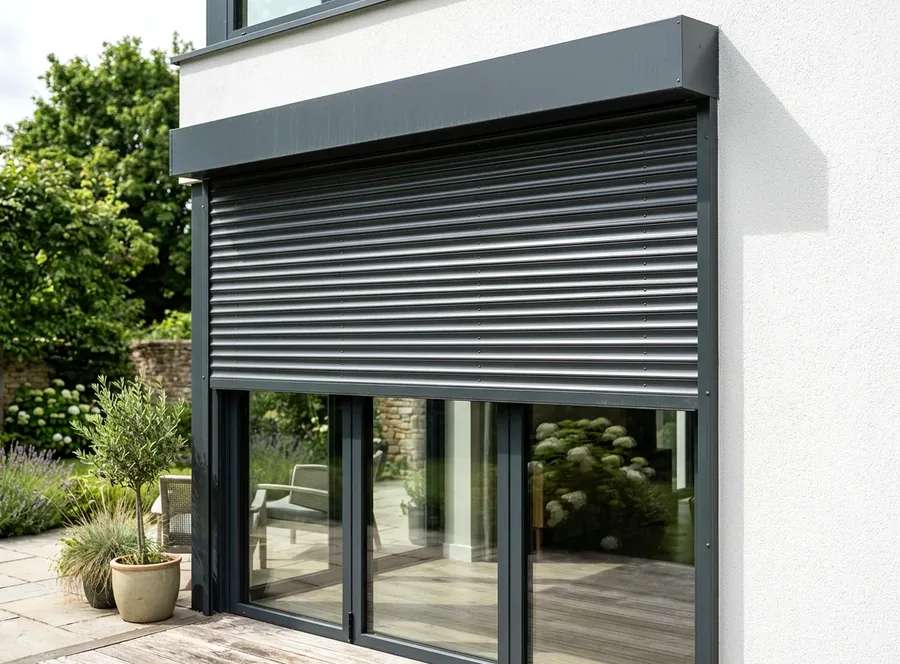
They roll down from a neat headbox above the opening, run in side guides, and stack completely out of sight in the
box when you don't want them.
What they do
- Heat control. The most effective thing we fit on a west-facing wall in January.
- Glare control. Lowered part-way, they shade the top of the glass and leave the view below.
- Insulation. The air gap between a closed roller shutter and the glass slows heat loss on cold highveld nights too.
- Blackout. Fully closed with the slats locked together, a room goes genuinely dark — useful for a media room or a shift worker.
- Light control by degree. Most systems let the slats sit slightly apart, giving ventilation and a soft striped light rather than all-or-nothing.
Say it plainly: these are shading roller shutters, not security-rated shutters.
They are specified and built for sun, heat, glare and light control. Security-rated roller shutters are a different product with a
different specification and different certification — available on request, but never something we would let you
assume you were getting. A shading roller shutter does not secure a home.
Specifying them here
- Motorisation is standard on anything wide — a manual strap on a four-metre patio roller shutter is a daily chore nobody keeps up.
- Timers and sun sensors will close them automatically during the worst hours while the house is empty.
- Powder-coated in a colour matched to the window frames or the fascia, so they read as part of the building.
- Several estates around Bryanston require exterior colours and box profiles to be approved before installation. We quote to the approved specification, and give you the sheet to submit where the rules aren't published.
- Built-on boxes suit existing houses; built-in boxes disappear into the lintel and are best decided at build stage.
 Bryanston Blinds